For several years, the presence of the Asian hornet in France has raised many questions. When a large insect appears in a garden, near a patio, or around a home, the question almost invariably arises: Asian hornets: how to recognize them?
This is a legitimate question, as they are often confused with other insects, which can lead to inappropriate and sometimes dangerous reactions.
Correctly identifying Asian hornets not only helps avoid mistakes, but also ensures that the right actions are taken to protect yourself, your environment, and to respond responsibly to this invasive species.
Why is it important to correctly identify Asian hornets?
The question Asian hornets: how to recognize them is not merely a matter of visual curiosity or temporary concern. It is a real safety issue, a matter of biodiversity protection, and of making sound decisions. The Asian hornet (Vespa velutina) is an invasive alien species whose impact on ecosystems is now clearly established, particularly on bee populations and other pollinating insects. In contrast, other similar insects, such as the European hornet or certain wasps, sometimes play a useful role in the natural balance and do not pose the same risks.
An approximate identification can lead to inappropriate reactions. Fear or lack of knowledge can cause unnecessary panic, the destruction of harmless insects, or dangerous improvised interventions. Conversely, mistaking an Asian hornet for a harmless insect can also lead to an underestimation of the real danger, especially if the presence of a nest goes unnoticed.
Correctly identifying Asian hornets therefore helps avoid mistakes, take the right actions at the right time, and respond proportionately. This is the essential first step in protecting people, preserving the environment, and acting responsibly toward an issue that now affects a large part of the country.
Physical characteristics of the Asian hornet
To answer the question Asian hornets: how to recognize them, careful observation of their appearance is essential.
Size and general morphology
The Asian hornet is a medium- to large-sized insect. It is generally slightly smaller than the European hornet, but its body is more slender. Its flight is fast, sometimes jerky, and often accompanied by a low-pitched buzz.
Color and appearance
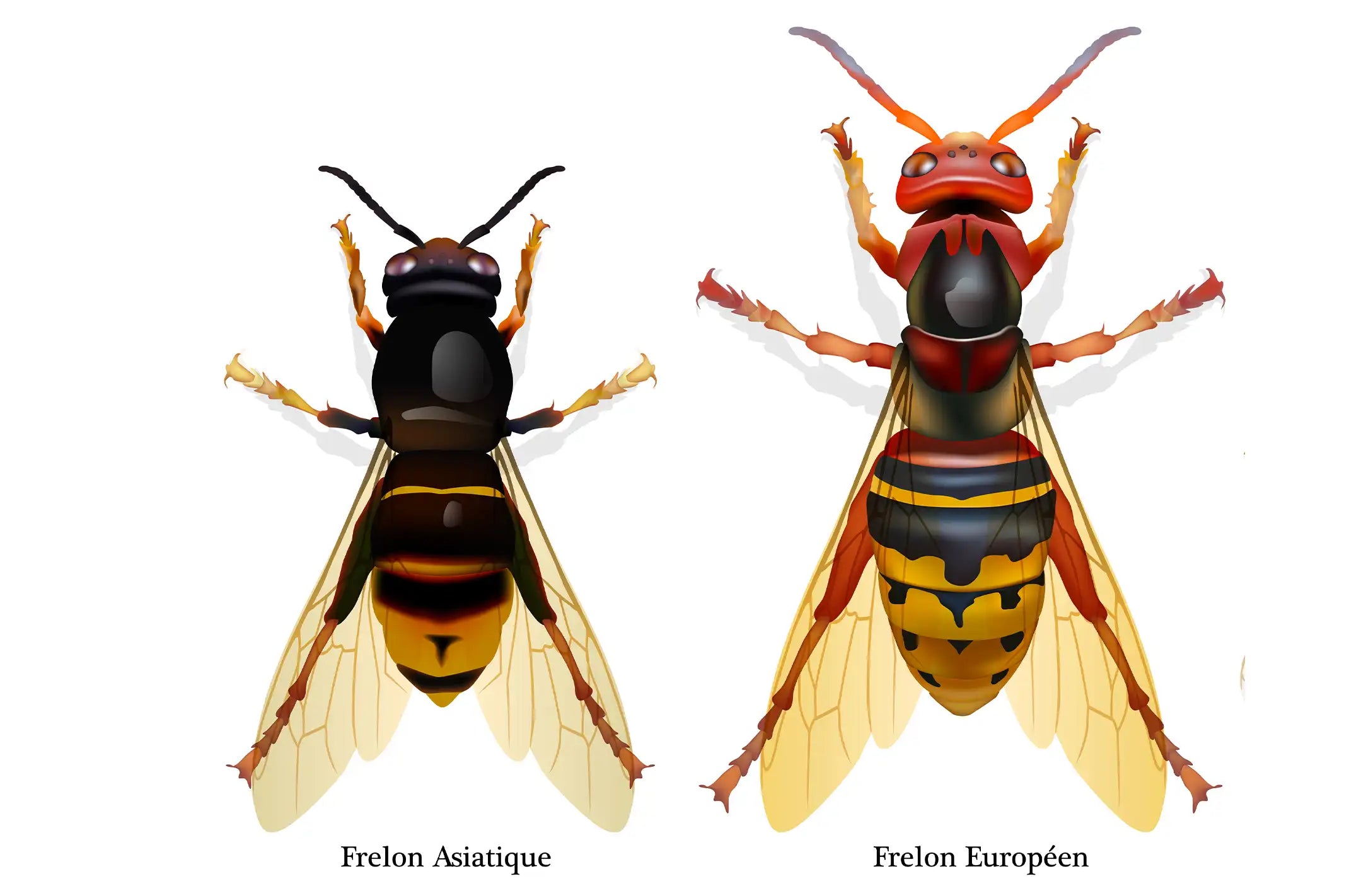
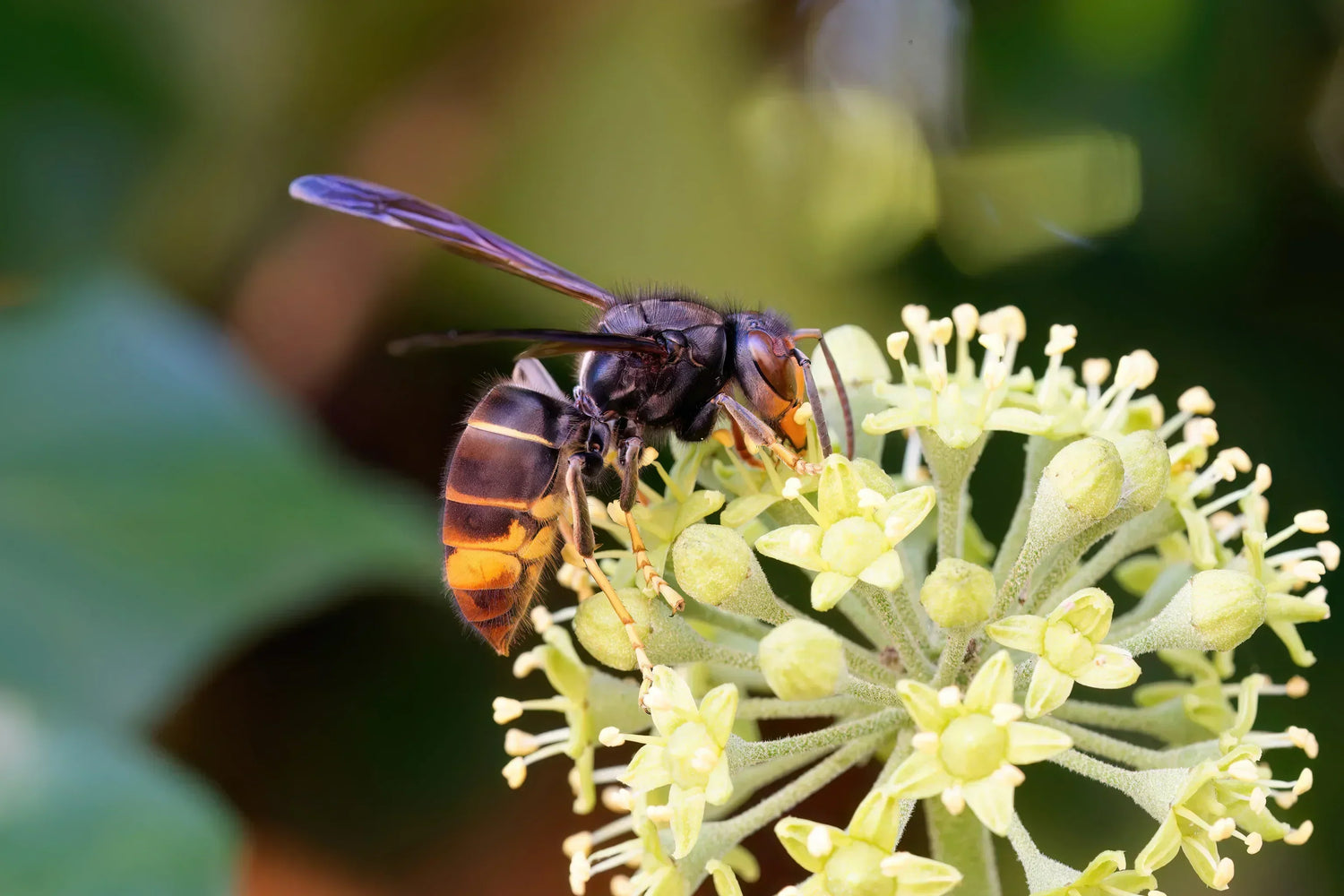
One of the most distinctive features for recognizing Asian hornets is their predominant color. Their bodies are mostly black or very dark brown, with:
- A dark abdomen with a thin orange band
- Very visible yellow legs at the end
-
A black head when viewed from the front, sometimes slightly orange when viewed from the side.
This combination of colors is a major clue for identifying the Asian hornet and avoiding confusion with other insects.
Differences between the Asian hornet and the European hornet:
Confusion between these two species is extremely common. This is why the question Asian hornets: how to recognize them almost always involves a comparison with the European hornet.
The European hornet (Vespa crabro) has:
- A largely yellow abdomen with black bands,
-
A reddish-brown or yellow head,
-
A generally lighter and more contrasting appearance.
Contrary to popular belief, the European hornet is often larger than the Asian hornet. Size alone is therefore not enough to tell them apart. It is color, the legs, and the overall appearance that allow you to reliably identify Asian hornets.
Behavior: a complementary clue
Beyond appearance, behavior also helps answer the question Asian hornets: how to recognize them.
The Asian hornet exhibits territorial behavior around its nest, is very active near food sources, and is particularly present around beehives.
When alone, it generally avoids contact with people. However, near a nest, its aggressiveness increases sharply if disturbed.
Where do Asian hornets live?
Habitat is another key element for recognizing Asian hornets. They often settle:
-
In gardens,
-
At the edge of forests,
-
Near urban areas,
-
Near food sources.
Their geographic range has expanded significantly in France, which explains why the question Asian hornets: how to recognize them now concerns a very wide audience.

The Asian hornet nest: an important distinguishing feature
Recognizing Asian hornets also involves identifying their nest.
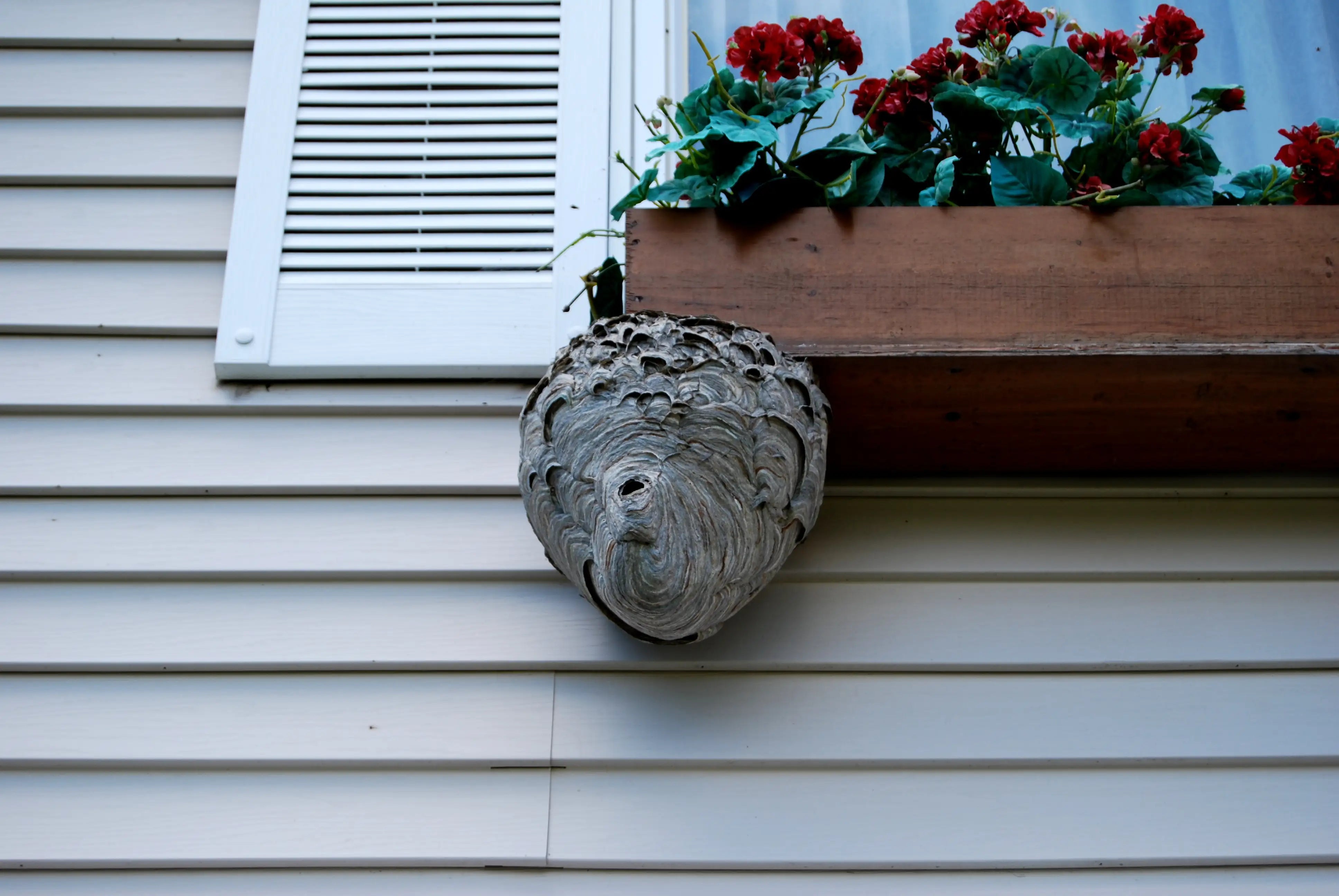
An Asian hornet nest is generally:
-
Spherical or oval,
-
Large at the end of the season,
-
Often located at height (in a tree, on a pylon, or on a building),
-
With a side opening.
Unlike other insects, the nest is often visible from afar, which is a valuable clue for confirming the presence of Asian hornets.
Risks associated with the presence of Asian hornets
Understanding Asian hornets: how to recognize them also means assessing the risks associated with their presence.
For people
An Asian hornet sting is painful and can cause:
- A local inflammatory reaction,
- Allergic reactions,
- A real danger in the event of multiple stings
The main risk occurs when the nest is threatened, leading to a collective attack.
For the environment
Asian hornets are formidable predators of bees. Their presence weakens colonies and disrupts pollination, with direct consequences for the ecosystem.
How to avoid confusing them with other insects?
Many insects are mistakenly confused with Asian hornets: wasps, European hornets, large harmless black insects.
To avoid any confusion, it is important to rely on several criteria at once: color, legs, behavior, habitat, and nest type. This comprehensive approach allows you to correctly answer the question Asian hornets: how to recognize them.
What to do if you see an Asian hornet near your home?
The presence of an Asian hornet near a home does not automatically mean the situation is dangerous. In most cases, it is an isolated individual foraging for food. The first reaction should therefore be to remain calm and observe. It is important to keep your distance, avoid sudden movements, and not try to chase it away. By discreetly observing its behavior and flight paths, it is sometimes possible to identify a regular route or the probable location of the nest. This observation phase allows you to better understand the situation and act appropriately afterward. Any attempt at direct intervention without proper equipment and protection is strongly discouraged, as it can provoke a defensive reaction and considerably increase the risk of being stung.
How to act safely
When the presence of Asian hornets becomes recurring, solutions exist to act without unnecessarily exposing yourself. The main thing is to avoid panic and favor targeted, gradual, and safe actions.
Acting early, from the first observations, often helps limit risks and avoid more complex situations later on.
Key takeaways
Knowing Asian hornets: how to recognize them is an essential skill today. By carefully observing their appearance, behavior, and habitat, it is possible to identify this invasive species without confusion.
Correct identification allows you to:
-
Avoid mistakes,
-
Protect people and animals,
-
Preserve biodiversity,
- Adopt appropriate and responsible solutions.